Your Doorbell Almost Became a Police Informant: How Public Outrage Killed the Ring-Flock Surveillance Partnership

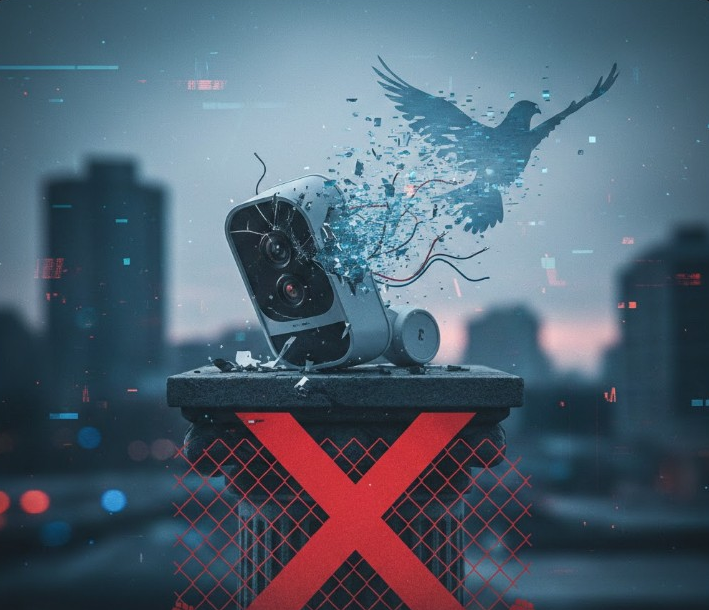
On Thursday, Amazon's Ring announced it was cancelling its planned integration with Flock Safety, the surveillance technology company whose camera network has been accessed by ICE and other federal agencies. It's a rare privacy victory powered by public pressure—but the larger surveillance infrastructure remains intact.
The Week That Changed Everything
Seven days ago, your Ring doorbell was about to become part of a law enforcement surveillance network.
Today, it isn't.
What happened in between is a masterclass in how public pressure—amplified by social media, digital rights organizations, and ordinary people who'd simply had enough—can force one of the world's largest companies to reverse course.
On February 12, 2026, Ring published a tersely-worded blog post announcing it was cancelling its partnership with Flock Safety, a police surveillance technology company whose network of automated license plate readers has been deployed across thousands of communities nationwide.
"Following a comprehensive review, we determined the planned Flock Safety integration would require significantly more time and resources than anticipated," Ring wrote. "As a result, we have made the joint decision to cancel the planned integration."
The corporate-speak translation: the backlash got too loud to ignore.
 Secure IoT House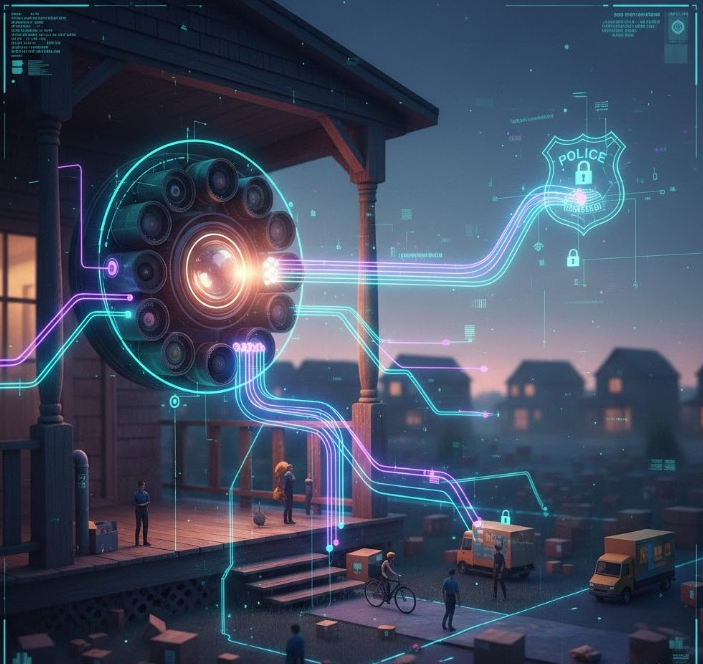
What the Ring-Flock Partnership Would Have Meant
To understand why this matters, you need to understand what the partnership would have enabled.
The Technical Integration
Ring's partnership with Flock, announced in October 2025, was designed to let law enforcement agencies using Flock's software request video footage directly from Ring doorbell owners in their jurisdiction.
Here's how it would have worked:
- A law enforcement agency using Flock's software would submit a "Community Request" for footage from a specific area during a specific timeframe
- Ring would notify users in that area about the request
- Users who opted to participate could share their doorbell footage with the agency
- The footage would flow through Flock's evidence management system
Ring emphasized that participation was voluntary. Users had to actively choose to share footage. No footage would be shared automatically.
But that framing obscured the larger concern.
The Network Effect Problem
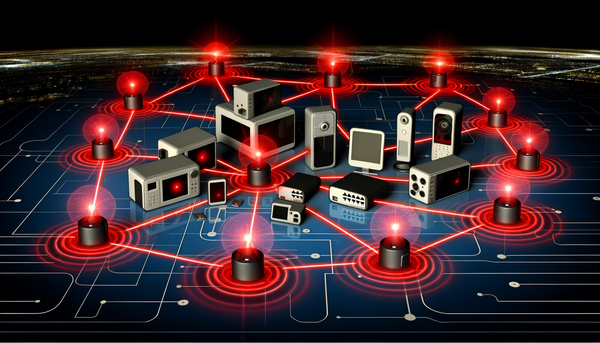
Flock Safety isn't just an evidence management platform. It operates one of the largest networks of automated license plate readers (ALPRs) in the United States.
Flock's network by the numbers:
- 5,000+ communities using Flock cameras
- Unknown millions of license plate scans daily
- Indefinite retention of plate data in many jurisdictions
- 70+ cities with publicly documented Flock deployments
When you add Ring's 20+ million doorbell cameras to a network that already tracks license plates across the country, you get something qualitatively different: a comprehensive surveillance infrastructure capable of tracking individuals' movements across both vehicles and pedestrian activities.
The ICE Connection
What pushed the backlash from "privacy concern" to "national emergency" was the federal connection.
Investigative reporting by 404 Media revealed that ICE and other Department of Homeland Security agencies have accessed Flock's network—even in "sanctuary cities" that officially limit cooperation with federal immigration enforcement.
While Flock has publicly denied that it shares data with ICE directly, the company's denials have been carefully worded. Flock doesn't need to share data "directly" if federal agencies can access the network through local law enforcement partners who do have accounts.
In the current political climate, with ICE conducting raids across the country and fears of mass deportation operations, the idea of Ring doorbells potentially contributing to immigration enforcement surveillance struck a nerve.
Social media erupted with calls to destroy Ring cameras. Influencers posted videos of themselves throwing Ring devices in the trash. The hashtag #RingFlocksOff trended.
The Super Bowl Ad That Poured Gasoline on the Fire
Ring's timing could not have been worse.
On Super Bowl Sunday—days before the partnership cancellation—Amazon aired a Ring advertisement for its new "Search Party" feature. The ad showed a neighborhood blanketed with Ring cameras, scanning streets to help locate a lost dog.
To Ring's marketing team, it was a heartwarming story about community and pets.
To privacy advocates, it was a surveillance nightmare brought to life in 30 seconds of primetime advertising.
The Electronic Frontier Foundation called Search Party "a surveillance nightmare" and noted that the same AI technology scanning for lost dogs could theoretically scan for anything—or anyone.
Ring maintains that Search Party "is not capable of finding people" and only processes animal images. But the visual of dozens of networked cameras scanning a neighborhood—combined with Ring's new "Familiar Faces" facial recognition feature and the Flock partnership—painted a picture of mass surveillance that resonated far beyond the usual privacy-concerned audience.
The Tipping Point
Senator Ed Markey (D-MA), a longtime Ring critic, sent an open letter to Amazon calling for the cancellation of Ring's facial recognition capabilities.
Privacy advocacy organizations coordinated campaigns. A protest was scheduled for Friday outside Amazon's Seattle headquarters.
And somewhere in Amazon's executive suite, someone did the math: the PR cost of maintaining the Flock partnership exceeded any law enforcement revenue or goodwill it might generate.
By Thursday, the partnership was dead.
 Secure IoT House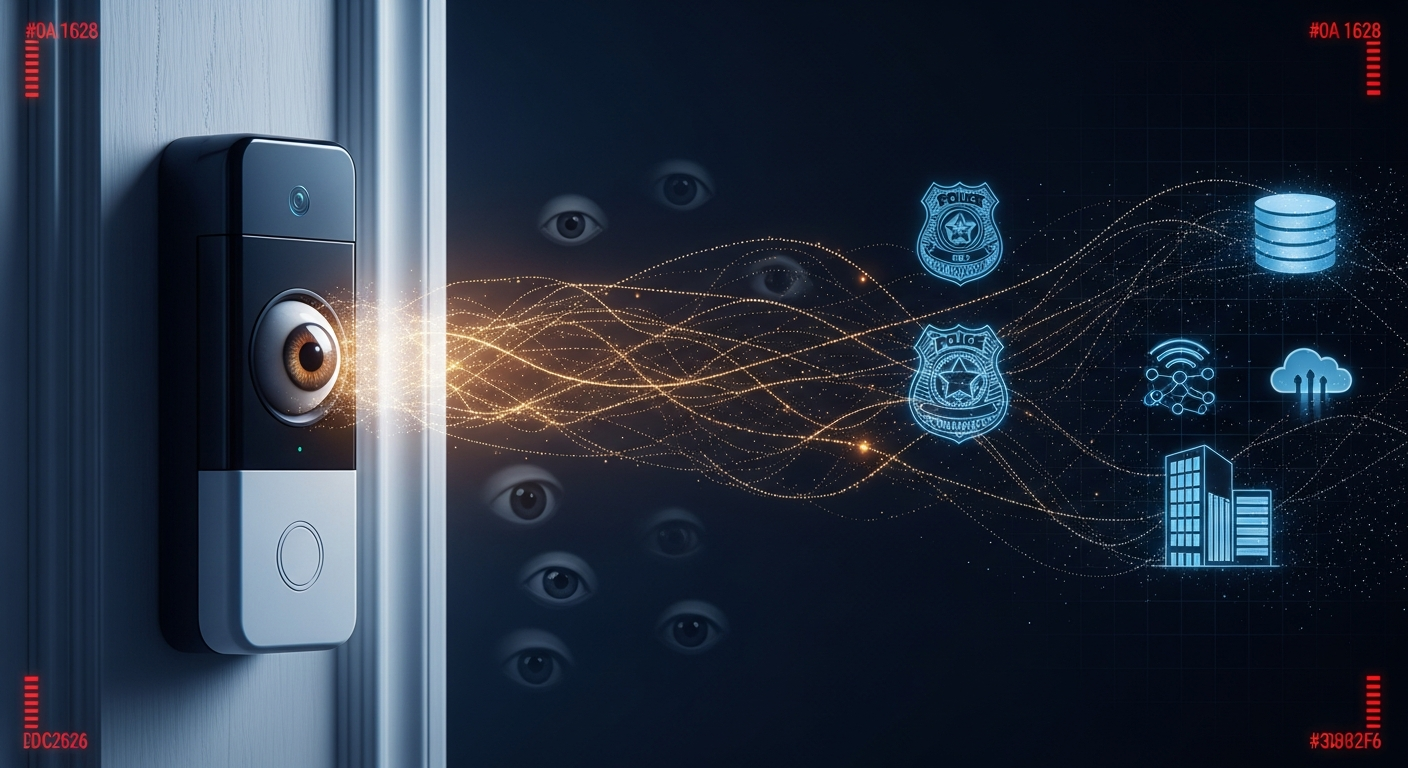
A Victory, But Not a Solution
Let's be clear about what this cancellation means—and what it doesn't.
What Changed
- Ring will not integrate directly with Flock Safety's platform
- Law enforcement agencies using Flock cannot request Ring footage through Flock's system
- The specific concern about Ring cameras feeding Flock's surveillance network is addressed
What Didn't Change
Ring's other law enforcement partnerships remain active. Ring still partners with Axon (the Taser company) for its Community Requests program. Law enforcement can still request footage from Ring users through that system.
The Community Requests program continues. Police can still submit requests for footage from Ring users in specific areas during active investigations. Users can still choose to share.
Ring's Neighbors app still exists. The app, which connects Ring users with local public safety agencies, continues to operate as a kind of neighborhood watch network with video capabilities.
Flock's surveillance network is still growing. The company's ALPR cameras are still deployed across thousands of communities. ICE can still reportedly access that data. The only change is that Ring footage won't flow through Flock's system.
Ring's Familiar Faces facial recognition is still rolling out. The same technology that Senator Markey warned about remains available to Ring customers.
This is a tactical victory, not a strategic one. The surveillance infrastructure remains. It just has one fewer integration point.
Ring's Complicated History with Privacy
This isn't Ring's first privacy controversy. Not by a long shot.
The Law Enforcement Partnerships
Ring has been working with police departments since at least 2016. By 2019, the company had partnerships with over 400 law enforcement agencies.
The original "Requests for Assistance" (RFA) program allowed police to request video directly from Ring users without a warrant. Privacy advocates criticized the program as a backdoor around Fourth Amendment protections.
Ring ended the RFA program in January 2024, replacing it with the current Community Requests system—which still allows police to request footage, just through third-party evidence management platforms like Axon and (until this week) Flock.
The Employee Access Scandal
In 2019, reports emerged that Ring had allowed employees and contractors in Ukraine to access customer video feeds as part of the company's AI training operations. Some employees reportedly shared videos of customers among themselves.
Ring denied that employees had "unfettered access" but acknowledged that some contractors could view certain videos for annotation purposes.
The Hacking Incidents
Multiple families reported incidents where strangers spoke to them through their Ring cameras after hackers gained access to their accounts. In some cases, hackers tormented children through bedroom cameras.
Ring blamed users for reusing passwords. Security researchers blamed Ring for not implementing stronger authentication requirements.
The Fire Hazard Recall
In 2022, Amazon recalled 350,000 Ring video doorbells due to fire hazards—the second recall in two years.
None of these incidents killed Ring. The brand persists because, for many consumers, the convenience of seeing who's at the door outweighs the privacy concerns they've heard about in passing.
But the Flock partnership was different. It touched a live wire: immigration enforcement. And that made the privacy concerns immediate and personal for millions of people.
The Broader Surveillance Landscape
Ring and Flock are just two nodes in a much larger surveillance ecosystem that's been quietly growing for decades.
The Smart Home Surveillance Complex
Ring (Amazon): 20+ million cameras in U.S. homes. Video retained in cloud. Partnerships with law enforcement.
Nest (Google): Millions of cameras connected to Google's AI infrastructure. Faces stored for Familiar Face detection.
Arlo: Cloud-connected cameras with optional local storage. No known law enforcement partnerships, but videos are stored on company servers.
Wyze: Budget cameras that have experienced multiple security breaches, including one that allowed 13,000 users to view footage from strangers' cameras.
Eufy: Marketed as privacy-focused with local storage, then caught uploading footage to the cloud despite privacy claims.
The License Plate Reader Network
Flock Safety: 5,000+ communities, millions of daily scans, accessed by ICE.
Vigilant Solutions (Motorola): Billions of plate scans in database. Used by police departments nationwide.
OpenALPR: Commercial ALPR software used by parking enforcement, toll collection, and law enforcement.
MVTrac: Repo industry ALPR network that law enforcement can access.
The Facial Recognition Ecosystem
Clearview AI: Scraped billions of social media photos to build facial recognition database used by law enforcement.
Amazon Rekognition: Cloud-based facial recognition sold to police departments (Amazon paused police sales in 2020; status unclear).
PimEyes: Consumer facial recognition service that lets anyone search for faces online.
The Data Broker Layer
Even if you never install a smart camera, your movements can still be tracked through:
- Cell phone location data bought from brokers
- Credit card transaction records
- Social media check-ins
- Transit payment systems
- Automatic toll collection
- Retailer loyalty programs
The Ring-Flock partnership was notable not because it would create surveillance that didn't exist, but because it would make existing surveillance more comprehensive and interconnected.
 Secure IoT House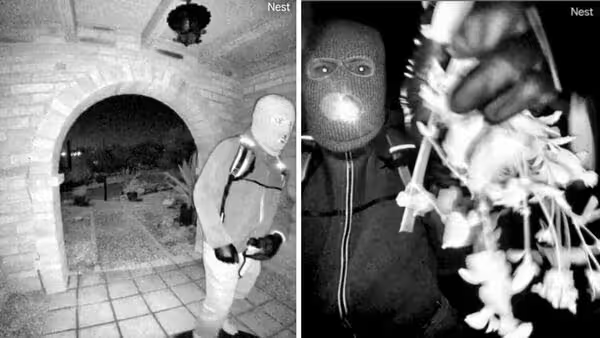
What This Means for Ring Owners
If you currently own a Ring doorbell or camera, here's what you should know:
Nothing Changes Immediately
The Flock integration never went live. "No Ring customer videos were ever sent to Flock Safety," Ring confirmed. If you weren't sharing footage before, you still aren't.
Your Existing Settings Remain
Ring's privacy settings, Community Requests preferences, and Neighbors app participation are unchanged. If you previously opted out of video requests, you're still opted out.
The Privacy Risks Remain
Ring still stores your video in Amazon's cloud. Ring still partners with Axon for law enforcement requests. Ring still offers Community Requests that let police ask for your footage.
If these things concerned you before Thursday, they should still concern you today.
Privacy Actions for Ring Users
If the Flock controversy has made you reconsider your Ring setup, here are concrete steps you can take:
Option 1: Adjust Ring Privacy Settings
Minimize cloud storage:
- Settings → Video Recording → Reduce recording length
- Settings → Privacy → Motion Zones → Limit detection area
Opt out of video requests:
- Settings → Community Controls → Disable "Receive Request for Assistance"
Disable Familiar Faces (if enabled):
- Settings → Video Settings → Familiar Faces → Off
Limit Neighbors app participation:
- Neighbors app → Settings → Adjust what you share
Option 2: Use Ring with Local Storage Only
Ring cameras can record to a local storage device if you purchase a Ring Alarm Pro with built-in eero router. This keeps footage off Amazon's cloud—though it limits some features.
Trade-offs:
- No remote viewing when away from home
- Manual backup required
- Some AI features won't work
Option 3: Replace Ring with Privacy-Focused Alternatives
Several camera systems offer local-only storage with no cloud dependency:
Ubiquiti UniFi Protect:
- Local NVR (Network Video Recorder) required
- No cloud storage or law enforcement partnerships
- Professional-grade but requires technical setup
Synology Surveillance Station:
- Runs on Synology NAS devices
- Local storage only
- DIY setup, ongoing maintenance required
HomeKit Secure Video (Apple):
- End-to-end encrypted storage in iCloud
- Apple has strong track record resisting law enforcement access
- Requires Apple TV, HomePod, or iPad as hub
- Limited to HomeKit-compatible cameras
Frigate + Home Assistant:
- Open source, fully self-hosted
- AI object detection runs locally
- Requires significant technical knowledge
Option 4: No Outdoor Cameras
Consider whether you need outdoor cameras at all.
Questions to ask:
- What specific security problem am I solving?
- Are there non-camera alternatives (better lighting, stronger locks, alarm system)?
- Am I comfortable with the privacy trade-offs for myself and my neighbors?
- Would a camera actually deter crime, or just record it?
Studies on the crime-deterrence effectiveness of residential cameras are mixed at best. The peace of mind may not justify the privacy implications—for you or for everyone who walks past your house.
The Larger Question: What Kind of Neighborhoods Do We Want?
The Ring-Flock controversy illuminates a choice we're all making, often without realizing it.
The Promise
Smart doorbells promise safety through visibility. "Know who's at your door." "Deter package thieves." "Keep your family safe."
The marketing works because the fears are real. People do steal packages. Strangers do knock on doors. The desire to see what's happening when you're not home is legitimate.
The Trade-Off
But every Ring doorbell that films a public sidewalk also films your neighbors walking their dogs. It films the postal carrier. It films the teenager walking home from school. It films the immigrant afraid to walk past cameras.
When every porch has a camera, and those cameras network together, and that network can be accessed by police, and those police share access with federal immigration authorities—the neighborhood transforms from a shared public space into a zone of comprehensive surveillance.
We're building this infrastructure one doorbell at a time. Each individual choice seems reasonable. The cumulative effect is something else entirely.
The Pressure Point
What made the Ring-Flock backlash different wasn't just privacy concerns. It was that the surveillance suddenly had a human face: the immigrant neighbor who might be reported to ICE based on footage from your porch.
For many people, that made the abstract concrete. The doorbell wasn't just watching for package thieves anymore. It might be participating in family separation.
That realization—that our individual security choices have collective consequences—is what sparked the backlash that killed the partnership.
What Comes Next
For Ring
Ring will continue its law enforcement partnerships through Axon and other approved providers. The company will continue developing AI features like Search Party and Familiar Faces. The fundamental business model—cloud-connected cameras as a platform for services and data—remains unchanged.
The Flock cancellation buys Ring some goodwill with privacy advocates, but the underlying tensions haven't been resolved. Expect more controversies as Ring's AI capabilities expand.
For Flock
Flock's law enforcement relationships are unaffected. The company will continue expanding its ALPR network. The reported access by ICE and other federal agencies will likely continue.
The Ring partnership would have been a major expansion opportunity. Its cancellation is a setback, but Flock's core business—selling surveillance technology to police—remains robust.
For the Surveillance Ecosystem
The Ring-Flock cancellation is a data point, not a turning point. Other smart camera companies continue working with law enforcement. Other surveillance networks continue expanding. Other integration opportunities will arise.
What this episode demonstrates is that public pressure can work—but it requires:
- Clear, concrete harms (the ICE connection)
- Visible organizing (EFF, protests, social media campaigns)
- Broad coalition (privacy advocates, immigration advocates, ordinary consumers)
- Sustained pressure (weeks of escalating attention)
- An actionable demand (cancel the specific partnership)
Those conditions don't emerge for every privacy concern. Most surveillance expansion happens quietly, without triggering this level of response.
For Privacy Advocates
This is a template. When a specific integration raises specific concerns with specific constituencies, focused campaigns can win.
But it's not a general solution. The underlying surveillance infrastructure—the cameras, the networks, the data brokers, the law enforcement partnerships—remains in place.
Real change requires policy: legislation limiting ALPR data retention, restrictions on law enforcement access to smart home data, facial recognition bans, data broker regulations.
Until then, victories like this one are defensive actions, not systemic change.
Conclusion: One Doorbell at a Time
Your Ring doorbell will not, for now, feed footage directly into Flock Safety's law enforcement surveillance network.
That's worth celebrating. Public pressure worked. Amazon blinked. Privacy advocates won a round.
But your Ring doorbell still uploads video to Amazon's cloud. It still participates in Community Requests if you've opted in. It still films your neighbors. It still might provide footage to police through Axon or other approved channels.
The surveillance infrastructure remains. This week, it lost one integration point. Next week, another might be announced.
The question isn't whether we can stop every surveillance expansion. The question is whether enough people, enough times, can raise enough objections to slow the construction of a world where every movement is tracked, every face is recognized, and every doorbell reports to someone.
This week, enough people said no.
What about next week?
Resources
Ring Privacy Settings:
Privacy Advocacy Organizations:
- Electronic Frontier Foundation
- ACLU Technology & Liberty Project
- Surveillance Technology Oversight Project (STOP)
Alternative Camera Systems:
Policy Resources:
This article was written by MyPrivacy.Blog staff. We cover privacy, surveillance, and digital rights without corporate sponsors or conflicts of interest. Support independent privacy journalism.