When Your City Goes Dark: Protecting Your Smart Home from Municipal Cyber Collapse


Your smart home is only as secure as the city that surrounds it. As municipal cyberattacks surge across America, homeowners are discovering that their connected houses, automated security systems, and digital lifestyles are vulnerable to threats they never considered – attacks on the very cities they call home.
The summer of 2025 has delivered a wake-up call to smart home enthusiasts nationwide: when your city's digital infrastructure crumbles, your carefully orchestrated home automation becomes a house of cards. From Nevada's statewide digital blackout to Minnesota's military cyber emergency, municipal ransomware attacks are creating cascading failures that reach right into our living rooms, bedrooms, and home offices.
For families investing in smart home technology, these municipal cyberattacks aren't distant government problems – they're domestic security threats that can leave your home vulnerable, your family disconnected, and your digital defenses compromised in ways traditional home security planning never anticipated.
 Secure IoT House
When City Services Become Your Home's Achilles' Heel
Nevada's Statewide Shutdown: Smart Homes in the Dark
On August 24, 2025, Nevada became the first state to suffer a complete ransomware-induced government shutdown. For the hundreds of thousands of Nevada families with smart homes, this wasn't just an inconvenience – it was a domestic crisis that exposed the hidden dependencies between municipal services and residential automation.
Consider the immediate impact on smart homes across Nevada:
Security System Failures: Many home security systems integrate with local emergency services for automatic dispatch. With 911 dispatch systems compromised and police databases offline, automated security alerts became meaningless.
Smart Lock Vulnerabilities: Residents relying on city-integrated access systems found themselves locked out of municipal facilities they needed to visit, while smart locks dependent on cloud services experienced intermittent failures due to regional infrastructure stress.
Home Office Disruption: With DMV systems offline, residents couldn't renew licenses, register vehicles, or complete other essential tasks – forcing many to leave their secure home offices for manual processes in a cyber-compromised environment.
Utility Integration Problems: Smart homes with utility monitoring and optimization systems lost connection to city power grid management, water system monitoring, and waste management scheduling.
The Nevada attack revealed a chilling reality: your smart doorbell, connected thermostat, and automated security system become islands of vulnerability when the broader urban ecosystem collapses around them.
 Secure IoT House
St. Paul: When Neighborhoods Need Military Protection
Minnesota's historic deployment of the National Guard cyber unit to combat St. Paul's ransomware attack sent shockwaves through residential communities. The Interlock ransomware gang's assault created a perfect storm of domestic disruption that every smart homeowner should understand:
Emergency Response Chaos: Smart home security systems that automatically contact emergency services faced delayed or compromised responses as city dispatch systems struggled under cyberattack.
Utility Service Uncertainty: Families with smart home energy management systems lost visibility into city power grid status, water quality monitoring, and municipal service schedules.
Neighborhood Watch Networks: Community-based smart home security networks that share information with local law enforcement found their data feeds compromised or unreliable.
School and Public Service Disruption: Parents with smart home automation tied to school schedules, public transportation, and municipal facility hours faced constant manual adjustments as city services flickered on and off.
Greenville, Texas: The Silent Home Security Threat
While Nevada and St. Paul grabbed headlines, Greenville's August ransomware attack demonstrated how municipal cyber incidents can create sustained residential vulnerabilities. With city servers compromised and police records inaccessible, the local security landscape fundamentally shifted:
Law Enforcement Database Failures: Home security systems that rely on local crime data feeds for threat assessment lost their intelligence sources.
Utility Payment Disruptions: Residents with automated bill pay systems for city services faced potential service disconnections when payment processing systems went offline.
Public Safety Information Gaps: Smart home apps that provide neighborhood safety updates, emergency alerts, and local threat information lost their municipal data sources.
The Smart Home Vulnerability Matrix
How Your Connected Home Becomes a Target
Smart homes pride themselves on convenience and security, but these same features create unique vulnerabilities during municipal cyberattacks:
Emergency Services Integration: Your smart security cameras, fire alarms, and medical alert systems often depend on city emergency response infrastructure that becomes unreliable during municipal cyber incidents.
Utility Dependencies: Smart thermostats, water leak detectors, and energy management systems rely on municipal utility data feeds that can be disrupted during city-wide cyberattacks.
Internet Infrastructure Sharing: Your home's smart devices compete for bandwidth on regional internet infrastructure that cities also depend on – creating network congestion and vulnerability during large-scale municipal incidents.
Cloud Service Regional Failures: Many smart home platforms rely on regional data centers and cloud services that can be overwhelmed or targeted during municipal cyberattacks.
 Secure IoT House
The Cascade Effect: How Municipal Attacks Reach Your Living Room
Recent attacks reveal troubling patterns of how municipal vulnerabilities affect residential smart home environments:
Shared Service Providers: Internet, cable, and telecommunications companies serving your smart home often also provide services to municipal clients, creating cross-contamination risks.
Regional Infrastructure Dependencies: Your smart home's connection to the broader internet often routes through the same infrastructure that cities use for their networks.
Vendor Ecosystem Overlap: Companies that install and maintain smart home systems often also service municipal contracts, potentially exposing residential clients to threats targeting government systems.
Family Digital Life Integration: Modern families integrate city services into their digital routines – from school district apps to municipal service notifications – creating multiple threat vectors.
Geographic Risk Assessment: Where Smart Homes Face Greatest Threats
High-Risk States for Connected Homeowners
Based on recent attack patterns and financial losses, smart homeowners should pay particular attention to municipal cyber risks in these states:
California: With over $2.5 billion in cybercrime losses in 2024, the state's high-tech infrastructure creates both opportunities and vulnerabilities for smart homes. Residents in the Bay Area and Los Angeles face elevated risks due to interconnected municipal and residential technology systems.
Texas: $1.3 billion in reported losses, with recent attacks on municipalities like Dallas and Greenville. The state's energy grid vulnerabilities can cascade into home power management systems, while municipal water systems affect smart irrigation and leak detection systems.
Florida: Over $1 billion in losses, with frequent attacks affecting high-density residential areas. Smart homeowners in hurricane-prone regions face compound risks when both natural disasters and cyberattacks threaten municipal infrastructure.
Colorado: The highest cyberattack risk score in the U.S. in 2024. Residents with smart home systems tied to local healthcare, education, and emergency services face particular vulnerabilities.
Municipal Attack Patterns: What Homeowners Need to Watch
Recent attacks reveal concerning trends that directly impact residential security:
Coordinated Regional Assaults: The 2019 Texas attack on 22 municipalities demonstrated how attackers can target entire regions, maximizing residential disruption across multiple communities simultaneously.
Critical Infrastructure Focus: Attacks on power grids, water treatment facilities, and transportation systems have direct impacts on smart home functionality and family safety.
Personal Data Exposure: Over 650,000 residents' personal information was compromised in Rhode Island's attack – including addresses, Social Security numbers, and family data that makes homes targets for physical crime.
 Breached Company
The Hidden Costs: What Municipal Attacks Mean for Your Family
Financial Impact on Homeowners
The true cost of municipal cyberattacks extends far beyond government recovery expenses:
Property Value Impacts: Homes in cyber-vulnerable cities may see decreased property values as buyers factor municipal cyber risk into location decisions.
Insurance Premium Increases: Home insurance companies are beginning to factor municipal cyber risk into residential premiums, particularly for smart home-equipped properties.
Service Disruption Costs: Families face additional expenses when municipal service failures force reliance on private alternatives (private security, backup power, alternative transportation).
Smart Home System Failures: Municipal attacks can trigger expensive smart home system resets, data recovery, and security system reconfiguration.
Family Safety Implications
Beyond financial costs, municipal cyberattacks create real safety risks for families:
Emergency Response Delays: When city 911 systems are compromised, families with medical emergencies or security threats face potentially life-threatening delays.
Public Safety Information Gaps: Families lose access to emergency alerts, weather warnings, and public safety notifications when municipal communication systems fail.
Child Safety Vulnerabilities: School district cyber incidents can expose student information and disrupt family coordination systems, while municipal park and recreation system failures affect after-school and summer programs.
Industry Impact Analysis: When Entire Community Support Systems Fail
Educational Infrastructure Collapse
Municipal attacks on educational systems create sustained disruption for families with school-age children:
Los Angeles Unified School District (2022): 100,000 individuals' data compromised, including student information that could enable targeting of specific households and families.
Broward County Public Schools, Florida (2021): The Conti ransomware attack disrupted not just school operations but also after-school programs, transportation systems, and family communication networks that many smart homes integrate with for daily scheduling.
These attacks demonstrate how educational cyber incidents cascade into residential life, affecting everything from smart home scheduling automation to family safety protocols.


Healthcare System Vulnerabilities
Healthcare attacks create particular challenges for families with smart homes equipped for elderly care or medical monitoring:
- Smart home health monitoring systems lose connection to healthcare provider networks
- Prescription management systems integrated with smart home reminders face disruption
- Emergency medical response coordination becomes unreliable
Building Residential Resilience: The Smart Home Defense Strategy
Lessons from Municipal Failures for Homeowners
Municipal attack patterns reveal critical insights for smart home security:
Backup Independence: While 78% of attacked governments relied on backups for recovery, smart homeowners need backup systems that function independently of municipal infrastructure.
 Secure IoT Office
Communication Redundancy: Families need multiple communication methods that don't depend on city-provided internet or emergency services.
Local Network Resilience: Smart homes should be configured to maintain core functionality even when external municipal services are compromised.
Physical Security Backup: Automated security systems need manual overrides and traditional backup methods when digital systems fail.
The Six Pillars of Municipal-Resilient Smart Homes
Smart homeowners should implement comprehensive resilience strategies:
1. Infrastructure Independence
- Backup power systems (generators, solar with battery storage)
- Independent internet connections (satellite backup, mobile hotspots)
- Local water storage and purification capabilities
- Manual overrides for all automated systems
2. Communication Continuity
- Multiple communication methods (landline, cellular, satellite, ham radio)
- Neighborhood communication networks independent of municipal systems
- Emergency contact systems that don't rely on city infrastructure
- Local information sharing networks
3. Security Redundancy
- Smart security systems with local storage and processing
- Traditional security measures that function without internet
- Neighbor watch networks and community security cooperation
- Physical security improvements that don't depend on technology
4. Family Preparedness
- Emergency supplies that don't require municipal services
- Family communication plans for when digital systems fail
- Alternative transportation and service options
- Financial preparation for extended municipal service disruptions
5. Data Protection
- Local data storage for critical family information
- Secure backup of important documents and digital assets
- Privacy protection for family information shared with municipal systems
- Identity monitoring for family members after municipal data breaches
6. Smart Home System Hardening
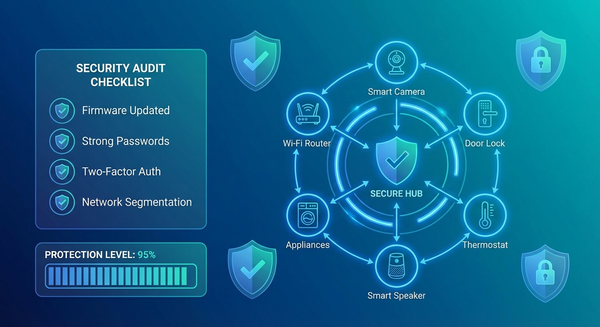
- Network segmentation to isolate smart home devices
- Regular security updates and monitoring
- Local processing capabilities for critical automation
- Vendor diversification to reduce single points of failure
Technology Evolution: New Threats to Home Security
Summer 2025: The Residential Threat Landscape
Recent attacks reveal sophisticated techniques that should concern smart homeowners:
ToolShell Campaigns: Attacks on Microsoft SharePoint systems affect families who access municipal services online, potentially exposing home addresses, utility information, and family data.
AI-Enhanced Social Engineering: Cybercriminals use artificial intelligence to craft targeted attacks against specific neighborhoods, using municipal data breaches to personalize phishing attempts aimed at residential victims.
IoT Botnets: Compromised municipal IoT systems can be used to launch attacks against residential smart home devices, turning city infrastructure into weapons against homeowner networks.
The Smart Home Attack Vector
Municipal cyberattacks create new pathways for residential targeting:
Municipal Data Mining: When cities are breached, attackers gain detailed information about neighborhoods, property values, and residents that can be used for targeted home invasion or burglary planning.
Infrastructure Mapping: Municipal system compromises reveal utility layouts, emergency response patterns, and neighborhood vulnerabilities that criminals can exploit.
Family Pattern Analysis: Breached city systems often contain information about family routines, school schedules, and service usage patterns that enable sophisticated targeting of specific households.
The Federal Response Gap: When Government Can't Protect Your Home
Shrinking Municipal Protection Affects Your Neighborhood
The federal government's decision to cut $8.3 million from MS-ISAC – a critical cybersecurity resource for local governments – has direct implications for residential security. When cities lack adequate cyber defense, neighborhoods become more vulnerable to:
- Increased frequency of municipal service disruptions affecting daily family life
- Longer recovery times when attacks occur, extending residential vulnerability periods
- Greater likelihood of criminal exploitation during municipal service failures
MS-ISAC prevented more than 59,000 attacks on local governments in 2024. Without this protection, families face increased risks of municipal cyber incidents affecting their daily lives and home security.
What Homeowners Can't Count On
The reality check for smart homeowners: federal agencies can't protect the municipal infrastructure your family depends on. Residential preparedness must assume municipal failure as a normal possibility, not an exceptional circumstance.
Economic Reality: The $50 Billion Threat to Your Community
The True Cost of Living in Cyber-Vulnerable Cities
Over the past three years, 246 ransomware attacks have struck U.S. government organizations at an estimated cost of $52.88 billion. This massive figure translates directly into residential impacts:
Municipal Tax Increases: Cities recovering from cyberattacks often raise taxes to fund recovery and improved cybersecurity, directly impacting homeowner expenses.
Reduced City Services: Budget constraints from cyber incident recovery can lead to reduced police patrols, delayed infrastructure maintenance, and cuts to community programs families depend on.
Regional Economic Impact: Municipal cyber incidents can affect local employment, business activity, and real estate values, impacting family financial security.
Recovery Costs Hit Home
Municipal recovery costs doubled to $2.83 million per incident in 2024. These costs affect residential communities through:
- Higher property taxes to fund municipal cyber recovery
- Reduced funding for neighborhood improvements and public safety
- Delayed infrastructure projects that affect residential property values
Real-World Impact: How Recent Attacks Affected Families
Nevada: Families in Digital Limbo
During Nevada's statewide attack, families experienced:
- Parents unable to renew driver's licenses needed for school pickup authorization
- Families with smart home utility monitoring losing visibility into city water and power systems
- Home-based workers unable to access government contractor systems needed for employment
- Elderly residents with medical alert systems losing confidence in emergency response reliability
St. Paul: Military Response in Your Backyard
The National Guard deployment in St. Paul created a surreal environment for residents:
- Families with smart home security systems questioning whether emergency response would function during crisis
- Parents losing access to school district communication systems integrated with family calendar automation
- Residents with municipal utility auto-pay systems facing potential service disconnections
- Smart home users dealing with intermittent internet service affecting home automation reliability
Greenville: The Silent Residential Impact
Greenville's quieter response masked serious residential implications:
- Families unable to access municipal services for weeks, requiring manual alternatives to digital processes
- Home security systems losing access to local crime data feeds for threat assessment
- Residents with city utility auto-pay facing billing disruptions and potential service interruptions
- Local emergency services operating with compromised information systems
Future-Proofing Your Smart Home for Municipal Cyber Reality
The New Normal for Residential Security
U.S. ransomware attacks increased by 149% year over year in the first five weeks of 2025. For smart homeowners, this trend demands fundamental changes in home security thinking:
Assumption-Based Planning: Assume your city will be attacked and plan your smart home accordingly.
Independence-First Design: Prioritize smart home systems that can function independently of municipal infrastructure.
Community Resilience Networks: Build neighborhood-level backup systems and communication networks that don't depend on city infrastructure.
Multi-Layered Backup: Every critical home function should have non-digital, non-municipal alternatives.
The Smart Home Advantage in Crisis
Well-designed smart homes can actually provide advantages during municipal cyber incidents:
Information Gathering: Smart home sensors can provide early warning of infrastructure problems affecting your neighborhood.
Communication Coordination: Home automation systems can help coordinate family responses to municipal service disruptions.
Resource Management: Smart home systems can optimize resource usage during extended municipal service outages.
Security Enhancement: Properly configured smart security systems can provide better protection than compromised municipal emergency services.
Conclusion: Secure Homes in Insecure Cities
The cyber siege against America's cities has made one thing clear: your smart home's security depends not just on your own technology choices, but on the cyber resilience of the entire municipal ecosystem around you.
For families investing in smart home technology, this new reality demands a fundamental shift in thinking. Home security is no longer just about protecting your property from burglars or monitoring your kids' activities – it's about building family resilience against the failure of the urban infrastructure your household depends on.
The cities that will attract and retain families are those that invest seriously in cybersecurity infrastructure. Similarly, the smart homes that will provide real security and convenience are those designed to maintain functionality even when municipal services fail.
Your family's safety and security shouldn't depend on your city's cybersecurity competence. In an era where municipal cyber weakness has become a neighborhood risk factor, the smartest homes are those that achieve true operational independence while maintaining the connected advantages that define modern residential life.
The cyber siege is here, and your home is only as secure as you make it – regardless of what happens to the city around you. The question isn't whether your municipality will be attacked, but whether your family will be ready when it happens.
In the age of municipal cyber warfare, the safest families are those who prepare for digital independence while hoping for municipal competence. Your smart home should be your castle – not just connected to the world, but capable of standing alone when that world goes dark.