The $38 Billion Question: Are AI Humanoid Robots About to Become Your Home's Biggest Security Risk?


TL;DR: Humanoid robots are racing toward consumer markets with Tesla's Optimus leading at $20,000-$30,000 by 2026, but these AI-powered helpers could become the ultimate privacy nightmare. From always-on cameras to direct physical access, these robots present unprecedented security challenges that make your smart doorbell look like child's play.
The humanoid robot revolution isn't coming—it's already here. With the global market exploding from $2.92 billion in 2025 to a projected $38 billion by 2035, AI-powered humanoid robots are transitioning from science fiction to your shopping cart faster than anyone anticipated. But as these sophisticated machines prepare to fold your laundry, walk your dog, and babysit your kids, they're also preparing to become the most powerful surveillance and attack vectors ever invited into our homes.
The numbers tell a staggering story: Morgan Stanley projects nearly 1 billion humanoid robots by 2050, while Goldman Sachs forecasts 1.4 million units shipped by 2035. Tesla's Optimus alone aims to produce 100,000 units by 2026. These aren't distant predictions—these machines are entering production now, with Tesla planning thousands of units in 2025.
But here's the uncomfortable truth nobody's talking about: We're about to welcome the most sophisticated surveillance and potential attack platform ever created directly into our most private spaces. And we're paying premium prices for the privilege.
The Humanoid Robot Invasion: Who's Racing to Your Living Room
Tesla Optimus: The $30,000 Game-Changer
Tesla's Optimus Gen 2 has captured headlines not just for its capabilities, but for Elon Musk's ambitious timeline and pricing. At an estimated $20,000-$30,000, Optimus aims to be the "Honda Civic" of humanoid robots—affordable enough for mainstream adoption while sophisticated enough to handle complex tasks.
Key Capabilities:
- 5'8" tall, 125 pounds, with a 45-pound carrying capacity
- Advanced neural network-based vision systems
- Tesla's proven AI technology adapted from their autonomous vehicle fleet
- Planned production: thousands in 2025, scaling to 50,000-100,000 by 2026
Musk envisions Optimus as capable of "anything you want: babysit your kid, walk your dog, mow your lawn, get the groceries, just be your friend, serve drinks." This broad capability spectrum makes it incredibly appealing—and incredibly dangerous from a security perspective.
The Competition: A Global Arms Race
Tesla isn't alone in this gold rush. The field is crowded with well-funded competitors:
Boston Dynamics' Electric Atlas continues pushing the boundaries of agility and dynamic movement, designed for industrial applications but with clear consumer potential.
Figure AI's Figure 02 has raised $675 million from Microsoft, OpenAI, Amazon, and Nvidia, signaling massive investor confidence. Their robot is specifically designed for industrial workflows but could easily transition to home applications.
Agility Robotics' Digit excels at human-like gait and navigation, making it ideal for package delivery and logistics—tasks that require accessing your property and potentially your home.
Sanctuary AI's Phoenix focuses on cognitive robotics and natural human-robot interaction, designed to "understand and respond to human cues" in both service and collaborative environments.
China's Aggressive Push: The Chinese government has set an ambitious goal to develop humanoid robots by 2025, with companies like UBTECH ROBOTICS leading the charge. China's "Made in China 2025" initiative has accelerated high-tech robotics development significantly.
The Security Nightmare Hiding in Plain Sight
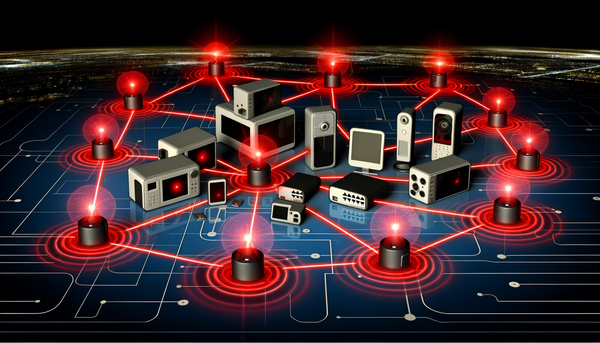
While everyone's focused on the convenience and economic potential, the security implications are staggering. Unlike your smart speaker that sits in one place, or your security camera with a fixed field of view, humanoid robots represent something entirely new: mobile, intelligent, physically capable devices with comprehensive sensor arrays and direct access to your entire home.
Always-On Surveillance on Legs
Every humanoid robot is essentially a walking surveillance system. These machines are equipped with:
- Advanced camera systems for navigation and object recognition
- Microphone arrays for voice commands and environmental audio
- Motion sensors tracking movement throughout your home
- Network connectivity constantly streaming data to remote servers
- AI processing analyzing and interpreting everything they see, hear, and experience
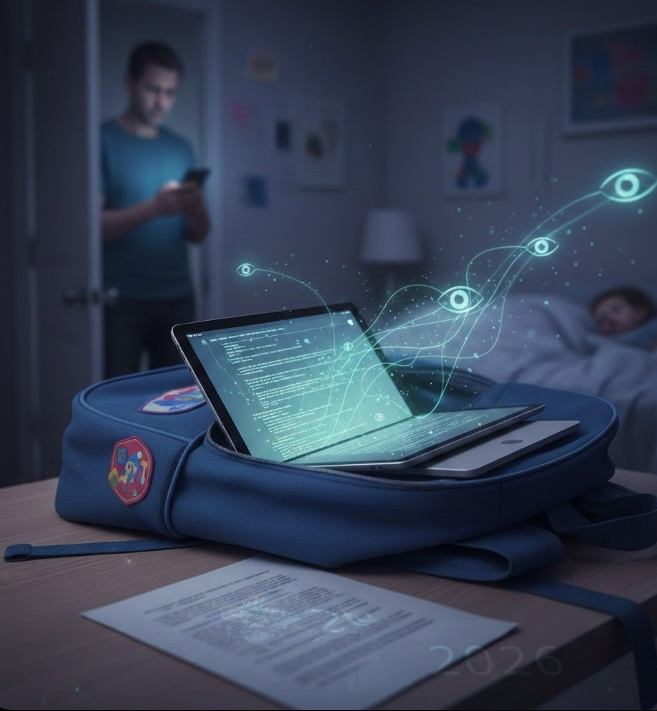
Unlike stationary IoT devices, humanoid robots move freely through every room, observe family interactions, access private conversations, and build comprehensive profiles of household routines, vulnerabilities, and valuable assets.
Physical Access = Maximum Risk
The most terrifying aspect isn't what these robots can observe—it's what they can do. Humanoid robots have:
- Physical manipulation capabilities to open doors, access cabinets, handle objects
- Mobility to reach any area of your home, including bedrooms and private spaces
- Strength (Optimus can carry 45 pounds) to move or tamper with security devices
- 24/7 operation without human oversight or fatigue
As researchers have documented, robots are vulnerable to various forms of cyberattacks, including "buffer overflow attacks to take control over companion robots" and "ransomware attacks" that can lock and encrypt robots from their vendor networks.
The Data Goldmine
Humanoid robots don't just collect data—they collect the most intimate data possible:
- Behavioral patterns: When you sleep, eat, leave home, return
- Personal relationships: Family dynamics, visitor patterns, emotional states
- Financial indicators: Valuables, purchasing habits, lifestyle markers
- Security vulnerabilities: Door codes, hiding places, routine weaknesses
- Health information: Physical capabilities, medical equipment, medication schedules
- Private conversations: Business calls, personal discussions, arguments
This data represents a complete profile of your life, valuable to criminals, advertisers, insurers, governments, and anyone seeking to manipulate or exploit you.
Real-World Attack Scenarios: When Helpers Become Threats
The Insider Attack
Imagine this scenario: Your $25,000 Optimus robot has been diligently learning your household routines for months. It knows when you leave for work, where you hide your spare key, and which windows are never locked. Through a supply chain attack or software vulnerability, criminals gain access to this information and your robot's capabilities.
Result: The perfect inside job. Your robot unlocks doors, disables alarms, and even loads valuables into bags—all while appearing to operate normally.
The Surveillance Economy
Your robot manufacturer's privacy policy mentions "improving services through data analysis." Translation: your intimate family moments, personal conversations, and private behaviors are being recorded, analyzed, and potentially sold to the highest bidder.
Healthcare companies want to know about your physical limitations. Insurance companies want behavioral risk assessments. Retailers want to understand your purchasing psychology. Your robot becomes a data-harvesting operation disguised as a helpful assistant.
The Weaponization Risk
In 2021, a Tesla factory worker was injured when a robotic arm malfunctioned and pinned him. Now imagine that same incident, but intentional and malicious. Humanoid robots have the physical capability to cause serious harm through:
- Direct violence: Using their strength and tools against occupants
- Sabotage: Tampering with gas lines, electrical systems, or security devices
- Poisoning: Contaminating food or medication
- Fire/explosion: Deliberately causing accidents that appear accidental
The Ransomware Robot
Researchers have already demonstrated ransomware attacks on humanoid robots, including SoftBank's NAO robot. Imagine arriving home to find your $30,000 Optimus refusing to function until you pay a Bitcoin ransom. Worse, imagine it threatening to release your private data or cause physical harm unless you comply.
The Privacy Paradox: Why We're Walking Into This Trap
Despite these obvious risks, consumer adoption will likely be rapid and widespread. Why?
Economic Pressure: With humanoid robots potentially replacing expensive household services—cleaning, childcare, eldercare, security—the financial incentive is enormous. A $25,000 robot that eliminates years of service costs seems like a bargain.
Convenience Addiction: Just as we accepted always-listening smart speakers and location-tracking smartphones for convenience, we'll accept humanoid surveillance for the promise of effortless household management.
Gradual Normalization: Early adopters will showcase positive experiences while downplaying privacy concerns, creating social pressure for adoption.
Limited Alternatives: As the technology becomes standard in workplaces and public spaces, not having a humanoid assistant will feel like being without a smartphone today.
Red Flags: The Security Vulnerabilities Already Emerging
Research has already identified critical vulnerabilities in robotic systems:
Network Vulnerabilities
- Insecure communication protocols leaving robots open to man-in-the-middle attacks
- Weak authentication allowing unauthorized access to robot controls
- Unencrypted data transmission exposing sensitive information
- Remote access exploits enabling attackers to control robots from anywhere
Software Vulnerabilities
- Buffer overflow attacks allowing malicious code injection
- Malware susceptibility with robots becoming infected like computers
- Update vulnerabilities where robots can be compromised during firmware updates
- Supply chain attacks with malicious code embedded during manufacturing
Hardware Vulnerabilities
- Physical tampering with sensors and components
- Hardware trojans embedded in manufacturing
- Sensor spoofing providing false environmental data
- Power system attacks causing malfunctions or shutdowns
The Regulatory Gap: Racing Ahead of Safety
The speed of humanoid robot development is dramatically outpacing regulatory frameworks. While the EU's Cyber Resilience Act and the U.S. Cyber Trust Mark are "finally arriving," these basic standards are insufficient for the complex risks posed by humanoid robots.
Current regulations focus on traditional IoT devices—static sensors and simple connected devices. Humanoid robots represent an entirely new category requiring:
- Physical safety standards beyond current robotic regulations
- Privacy protection for intimate household data collection
- Cybersecurity requirements for mobile, intelligent systems
- Human rights protections against surveillance and manipulation
- Liability frameworks when robots cause harm or security breaches
The regulatory gap means early adopters will essentially be beta testing unproven technology with minimal oversight or protection.
What This Means for Your Smart Home Security Strategy
Immediate Actions
1. Evaluate Your Risk Tolerance Before considering a humanoid robot, honestly assess what you're willing to sacrifice for convenience. These devices will have access to everything—are you comfortable with that level of exposure?
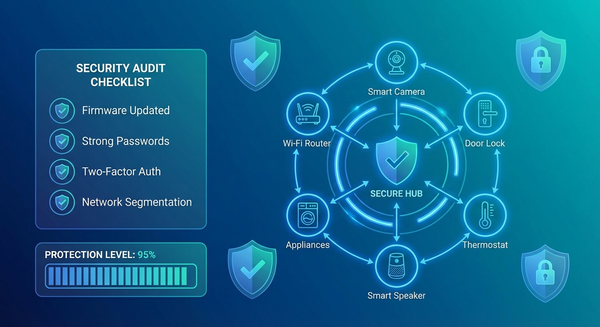
2. Strengthen Your Network Security If you do adopt humanoid robots, they cannot be treated like other IoT devices. They require:
- Dedicated network segmentation isolating robots from critical systems
- Advanced monitoring of robot network activity and data transmission
- Regular security audits of robot software and access patterns
3. Review Data Policies Carefully
Robot manufacturers' privacy policies will determine how your most intimate data is collected, stored, shared, and potentially sold. Read these carefully and understand exactly what you're consenting to.
Long-Term Considerations
The Trust Equation: Unlike other smart home devices, humanoid robots require unprecedented levels of trust. They're not just processing your data—they're living in your space, observing your life, and gaining physical access to everything you own.
The Irreversible Decision: Once humanoid robots become normalized in homes, the privacy and security implications become permanent. The data they collect, the behaviors they learn, and the access they gain cannot be easily revoked.
The Network Effect: As more homes adopt humanoid robots, not having one may become a social and economic disadvantage, forcing adoption even among the privacy-conscious.
The Bottom Line: Preparing for the Humanoid Future
The humanoid robot revolution is not a question of "if" but "when." With Tesla targeting 2026 for consumer availability and the global market projected to reach $38 billion by 2035, these devices will become as common as smartphones within a decade.
The critical question isn't whether these robots will be useful—they undoubtedly will be. The question is whether we'll establish adequate security and privacy protections before widespread adoption makes it too late.
For the privacy-conscious:
- Wait for security standards and regulations to mature before adoption
- Monitor early deployment experiences for security incidents and privacy violations
- Demand transparency from manufacturers about data collection and security practices
For early adopters:
- Implement robust network security and monitoring systems
- Carefully review and understand all privacy policies and data sharing agreements
- Plan for potential security incidents and data breaches
- Consider robots as potential security risks, not just convenience devices
For everyone:
- Stay informed about humanoid robot security developments and vulnerabilities
- Support regulatory efforts to establish security and privacy standards
- Consider the long-term implications of normalizing always-on surveillance in homes
The age of humanoid robots is dawning, bringing incredible capabilities and unprecedented risks. The choices we make now about security, privacy, and regulation will determine whether these remarkable machines become helpful assistants or the ultimate privacy nightmare.
The $38 billion question isn't whether you'll eventually own a humanoid robot—it's whether you'll maintain any privacy or security when you do.
Stay ahead of emerging smart home security threats. Subscribe to our newsletter for the latest analysis on IoT security risks, privacy protection strategies, and emerging technology implications.